Dredging plays a critical role across Michigan, from the vast shoreline of the Great Lakes to inland lakes, rivers, harbors, and managed waterways. Michigan is defined by water. Lake Michigan, Lake Huron, Lake Superior, and Lake Erie support commerce, recreation, and municipal infrastructure. Inland systems such as the Grand River, Manistee River, and Muskegon River, along with hundreds of smaller lakes, experience constant sediment transport that alters depths and flow patterns over time.
Sediment buildup is a natural process, but in Michigan it is intensified by seasonal storms, spring snowmelt, agricultural runoff, shoreline erosion, and historic industrial activity. Over time, these sediments restrict navigation, reduce water quality, and damage fish habitats. Harbors fill in, channels narrow, and shallow areas expand where depth once existed.
To address these challenges, contractors rely on two primary approaches: hydraulic dredging and mechanical dredging. Each method removes sediment, but they do so in very different ways. Selecting the correct approach directly affects project timelines, environmental compliance, water clarity, and long-term results.
This article explores dredging methods for Michigan waters by breaking down how hydraulic and mechanical dredging work, where each method performs best, and how Michigan-specific conditions influence the decision. Understanding the differences between hydraulic and mechanical dredging is essential for agencies, marinas, municipalities, and private owners planning sediment removal projects. A thoughtful dredging method helps ensure results that protect waterways while meeting regulatory and performance expectations.
Understanding Dredging in Michigan Waters
What Is Dredging?
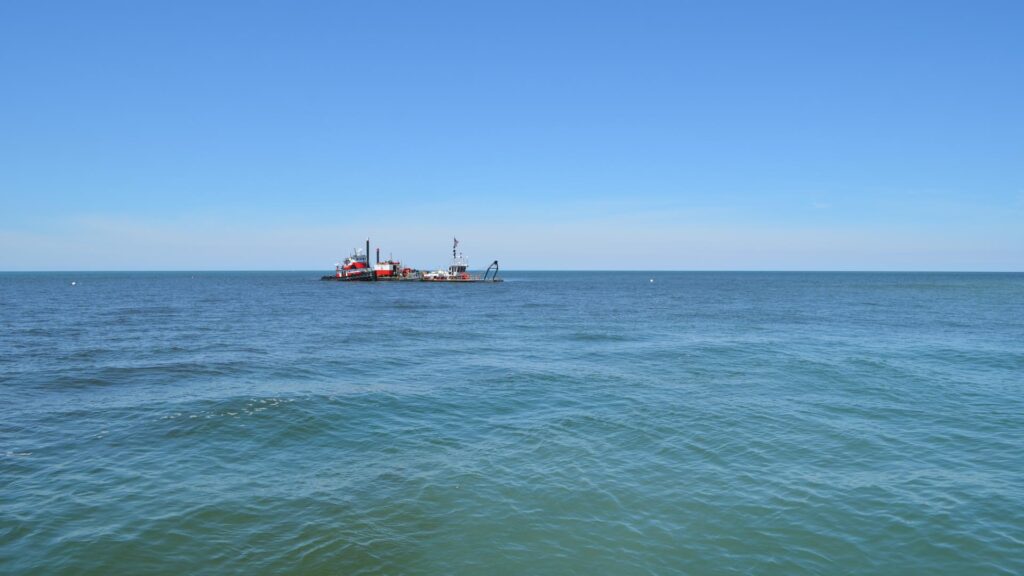
Dredging is the process of removing sediment, debris, or accumulated material from the bottom of water bodies to restore depth, improve flow, or enhance water quality. The material removed may include silt, sand, organic matter, debris, or compacted soils.
In Michigan, dredging is used for many purposes. Ports along Lake Michigan require periodic dredging to maintain navigable depths for commercial shipping and recreational boating. Inland lakes often accumulate sediment from shoreline runoff and decaying vegetation, reducing depth and water clarity. Municipal systems employ dredging to maintain stormwater basins, canals, and flood-control infrastructure.
Across these applications, dredging methods for Michigan waters must balance efficiency with environmental protection, particularly in sensitive ecosystems.
Why Dredging Matters in Michigan
Michigan’s economy and lifestyle are deeply connected to its waterways. Recreational boating, fishing, tourism, and waterfront development all depend on reliable water access. Commercial shipping in ports like Manistee, Muskegon, and St. Joseph relies on maintained channel depths. Flood prevention depends on rivers and drainage systems functioning as designed.
Sediment buildup affects fish spawning grounds, reduces oxygen exchange, and alters shoreline stability. In harbors such as Manistee, regular dredging helps maintain safe access for marinas, charter fishing operations, and commercial vessels.
Understanding dredging methods for Michigan waters is not just a technical issue. It is a long-term investment in environmental health and economic stability.
What Is Hydraulic Dredging?
How Hydraulic Dredging Works
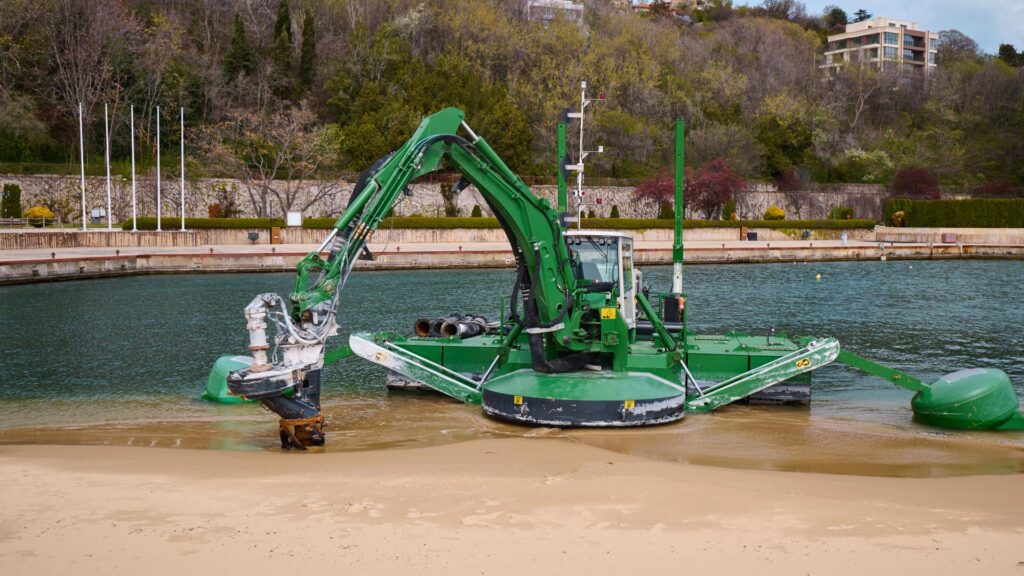
Hydraulic dredging removes sediment by suction. A dredge pump draws sediment from the water bottom and mixes it with water to form a slurry. This slurry is then transported through pipelines to a designated disposal or processing site.
The process is continuous. As material is removed, the dredge advances, maintaining steady progress. From a pump-sealing perspective, hydraulic systems rely on durable seals and wear-resistant components to withstand abrasive slurries over extended operating periods.
Equipment and Techniques
Common hydraulic dredging equipment includes cutter suction dredgers, trailing suction hopper dredgers, and fixed pipeline systems. Cutter suction dredgers use a rotating cutter head to loosen sediment before suction. Pipeline systems move slurry to shore-based containment areas or dewatering facilities.
These systems are designed to efficiently move large volumes. Seal reliability is critical, since slurry leakage or pressure loss can interrupt operations and increase maintenance demands.
Ideal Uses in Michigan Waters
Hydraulic dredging is well-suited to fine sediments, such as silt and sand. These materials are common at river mouths, inland lakes, and harbor entrances throughout Michigan.
Large-scale projects benefit most. Harbor deepening, lake restoration efforts, and stormwater basin maintenance often rely on hydraulic systems. In many cases, dredging methods for Michigan waters favor hydraulic dredging where access is open and sediment is uniform.
Pros and Cons of Hydraulic Dredging
Advantages
- Fast, continuous sediment removal
- Lower underwater disturbance compared to mechanical excavation
- Efficient for large volumes and extended areas
Limitations
- Requires more setup space for pipelines and staging
- Less effective for heavy debris, gravel, or compacted materials
When evaluating hydraulic versus mechanical dredging, hydraulic systems excel in scale and consistency but are not always the right fit for confined or debris-heavy sites.
What Is Mechanical Dredging?
How Mechanical Dredging Works
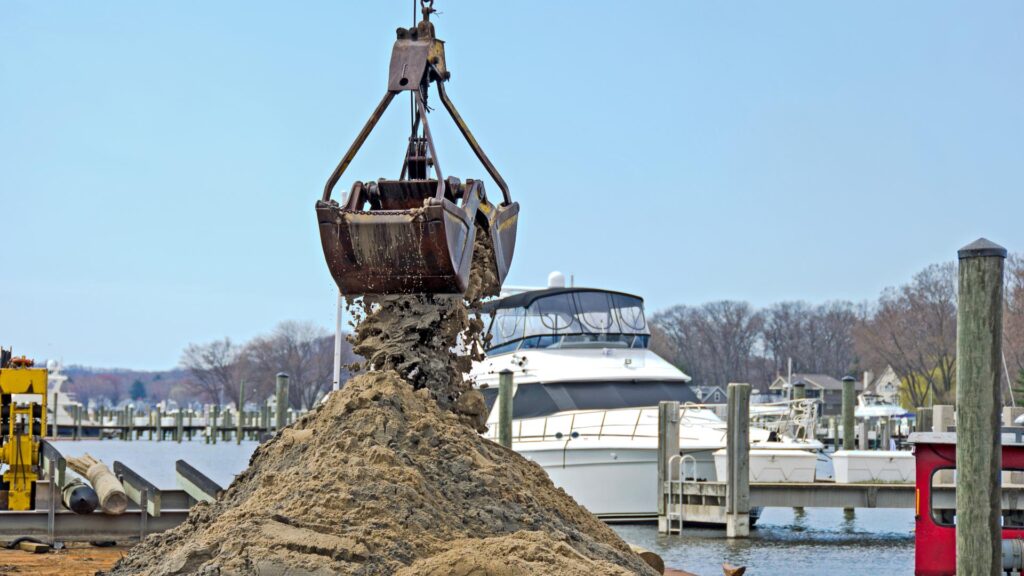
Mechanical dredging removes sediment using physical excavation. Buckets, clamshells, or excavator attachments scoop material from the bottom and lift it out of the water for placement on barges or shore.
Unlike hydraulic systems, mechanical dredging is intermittent rather than continuous. Each bucket load is removed individually, enabling high precision.
Equipment and Techniques
Mechanical dredging equipment includes clamshell dredges, excavators mounted on barges, shoreline excavators, and specialized grabs. These machines are often selected for projects near docks, seawalls, or infrastructure where control is essential.
From an equipment reliability standpoint, mechanical systems reduce slurry handling demands but introduce wear at pivot points and bucket edges.
Ideal Uses in Michigan Waters
Mechanical dredging is most effective where sediment is dense, compacted, or mixed with debris. Marina basins, boat slips, and areas near bridge abutments often require mechanical excavation.
In tight or shallow environments, dredging methods for Michigan waters often lean toward mechanical approaches due to access limitations.
Pros and Cons of Mechanical Dredging
Advantages
- Strong performance in heavy or debris-laden material
- Greater control and placement accuracy
Limitations
- Increased water turbidity during operation
- Slower production rates for large-scale projects
In any dredging methods comparison, mechanical dredging stands out for precision rather than volume.
Hydraulic vs. Mechanical Dredging: A Direct Comparison
| Feature | Hydraulic Dredging | Mechanical Dredging |
| Best for | Fine sediments such as silt and sand | Heavy or coarse material |
| Speed | High for large areas | Slower but precise |
| Environmental Impact | Lower turbidity | Higher turbidity possible |
| Setup | Complex with pipelines | Simpler equipment |
| Michigan Applications | Lakes, rivers, ports | Marinas, confined waterways |
This dredging methods comparison highlights why no single approach fits every project. Understanding the differences between hydraulic and mechanical dredging enables planners to align methods with site conditions.
Michigan Dredging stands out because it strategically deploys both methods. Rather than imposing a single solution, Michigan Dredging evaluates sediment type, access, and environmental goals before selecting equipment.
How to Decide the Right Dredging Method
Assessing Site Conditions
Key factors include sediment composition, water depth, shoreline access, and disposal requirements. Fine sediments favor hydraulic systems, whereas compacted or debris-filled material indicates mechanical dredging.
Local Michigan Factors
Michigan’s freeze-thaw cycles influence scheduling and sediment stability. Fish spawning seasons, shoreline erosion risks, and state permitting requirements all affect project planning. Selecting dredging methods for Michigan waters requires knowledge of these local constraints.
Hybrid or Combined Approaches
Some projects benefit from combining methods. Mechanical excavation may remove heavy debris first, followed by hydraulic dredging to fine-tune depths and efficiently dewater sediment. This blended approach often appears in studies comparing advanced dredging methods.
Expert Guidance from Michigan Dredging
Michigan Dredging provides consulting services to assess site conditions prior to equipment mobilization. Their planning process emphasizes cost control, environmental responsibility, and long-term performance rather than short-term speed alone.
Real-World Examples in Michigan
- Harbor Maintenance Dredging
Great Lakes ports require regular sediment removal to maintain shipping lanes. Hydraulic dredging is commonly used for channel maintenance, while mechanical dredging addresses localized problem areas near docks.
- Inland Lake Restoration
Inland lakes such as Higgins Lake and Torch Lake have long histories of sediment management. Historic dredging operations, including equipment such as the Quincy Dredge Number Two, illustrate how Michigan has adapted dredging practices over time. Modern dredging methods in Michigan waters build on these lessons, incorporating improved environmental safeguards.
- Municipal Waterway Projects
Cities across Michigan maintain stormwater ponds and flood control channels through dredging. Mechanical dredging often handles debris, while hydraulic systems support sediment removal where access allows.
Why Choose Michigan Dredging
- Local Michigan Expertise
Michigan Dredging brings hands-on experience across Great Lakes harbors, inland lakes, rivers, and municipal waterways. Their understanding of Michigan sediment behavior, seasonal conditions, and shoreline dynamics ensures practical project planning.
- Hydraulic and Mechanical Capabilities
Michigan Dredging deploys both hydraulic and mechanical dredging systems, enabling each project to employ the most effective methods for Michigan waters based on sediment type, access, and scale.
- Method-First Project Planning
Every project begins with a site assessment. Sediment composition, water depth, environmental sensitivity, and disposal requirements guide the choice between hydraulic and mechanical dredging.
- Environmental and Regulatory Awareness
Projects are planned to meet Michigan permitting requirements, protect fish habitats, and manage turbidity. Environmental considerations are built into execution, not added later.
- Right-Sized Equipment Selection
Equipment is matched to the project scope to control costs, reduce disruption, and improve efficiency.
- Clear Communication and Reliable Results
Clients receive clear explanations, realistic timelines, and consistent outcomes supported by experience with proven dredging methods across Michigan waterways.
The Right Dredging Strategy for Michigan Projects
Choosing between hydraulic and mechanical dredging is not a matter of which method is superior overall. It concerns which method best fits the site, sediment, and goals. This dredging methods comparison shows that success depends on informed decision-making.
By understanding the differences between hydraulic and mechanical dredging, stakeholders can avoid unnecessary costs, reduce environmental impact, and achieve lasting improvements. Michigan Dredging brings local knowledge and technical expertise to every project, making it the preferred partner for implementing appropriate dredging methods for Michigan waters.
For agencies, municipalities, and property owners seeking reliable outcomes, contacting Michigan Dredging for a site assessment is the first step toward a successful dredging project.